Why Vendor Support Matters More Than Features in Replay Systems
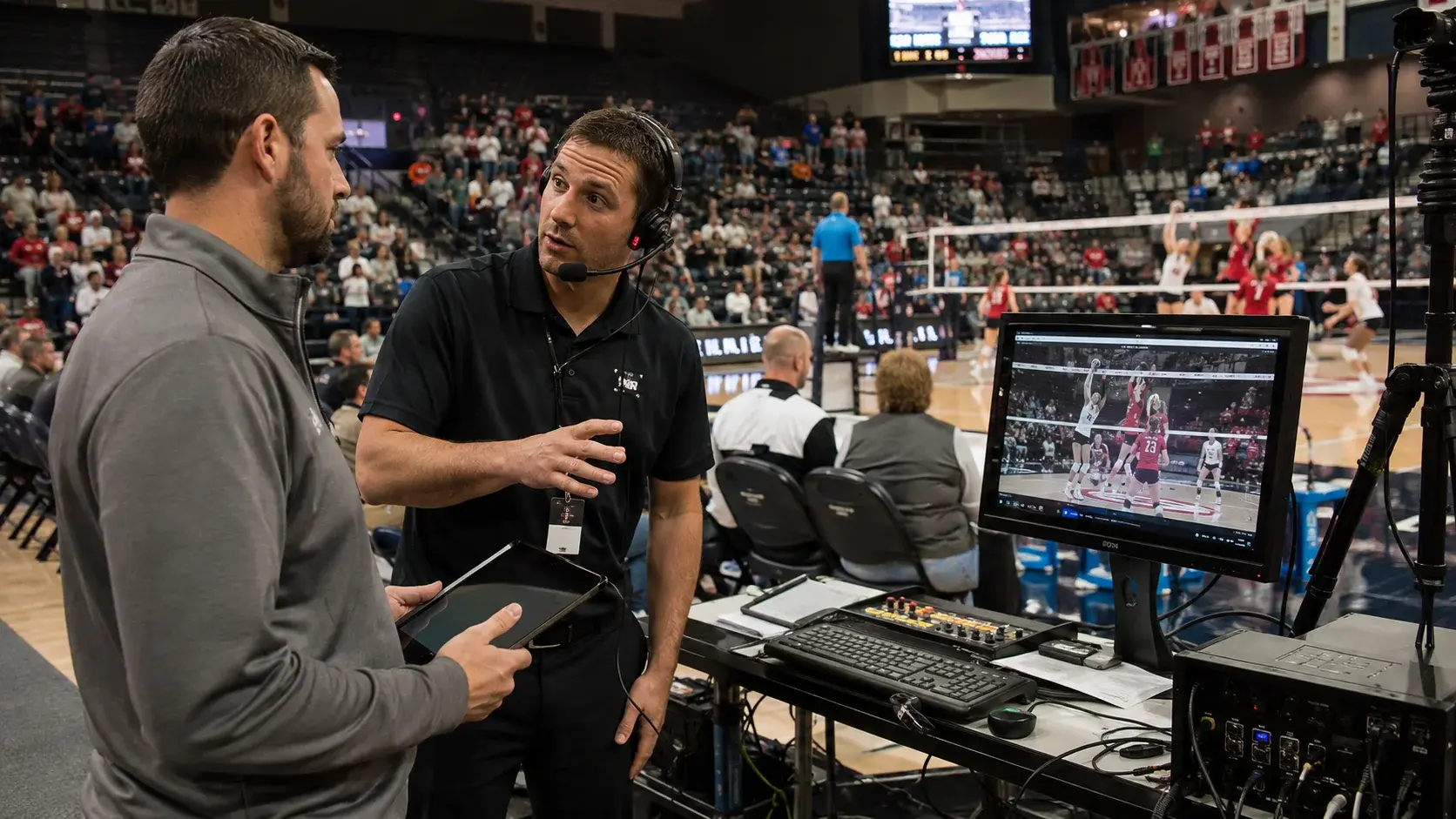
Here is a test worth running on any replay vendor before you sign. Call the support line. Not the sales line. The support line. See who picks up, how fast, and whether the person on the other end has ever actually stood on a sideline.
Most coaches learn the answer the hard way. The system that demoed beautifully in the spring turns into a ticket number in October. You send an email into a queue. You get an automated reply with a case ID. You wait. Meanwhile the officials are waiting, the crowd is waiting, and the call you needed to get right just went the other way.
We built Echo Replay to fail that test on purpose. When you call us, you are not entering a queue. You are reaching people who helped design the system, who know your setup, and who have coached long enough to understand that "before halftime" is not a nice-to-have. It is the entire point.
The mythBigger vendors mean better support
It sounds obvious. A larger company has more staff, more resources, more coverage. So it should follow that they take better care of you. In practice, scale usually buys the opposite. The bigger the vendor, the more layers sit between you and anyone who can actually solve your problem.
Tier one reads from a script. Tier two escalates. Tier three calls you back in three to five business days, which is a strange unit of time to a coach whose next game is Tuesday. Somewhere in that chain, the person who knows your gym, your camera angles, and your conference rules does not exist. You are a row in a database, and your Friday night is a metric on someone's dashboard.
When the clock is running, you do not need a help desk. You need someone who already knows your gym.
The reframeBoutique is not smaller. It is closer.
We are not the biggest name in the room. We know that, and we are not trying to hide it. What we are is close. Close enough that the person who answers your call has probably already seen your setup. Close enough to pick up on the first ring during a Saturday tournament. Close enough that "we will look into it" turns into "here is the fix" inside the same conversation.
That closeness is not a consolation prize for being small. It is the product. A challenge review system is only worth what it delivers in the ten seconds after a whistle. If getting help is slow, the whole thing is slow, no matter how good the hardware looked in the brochure.
- Submit a ticket, wait for a case number
- Repeat your setup to three different reps
- Callback windows measured in business days
- Nobody on the line has coached a game
- Reach a real person who knows your system
- Answers on game day, when it matters
- Fixes resolved in the same conversation
- Built and backed by people from the sideline
The evidenceCoaches do not stay for the hardware
You can find good cameras anywhere. What keeps a program on a system for years is the feeling that someone has their back. The athletic directors and coaches who use Echo tend to talk less about specs and more about the people behind them.
Lewis University runs Echo for every men's and women's basketball and volleyball game, and points to a support team that responds fast and resolves issues quickly. Colorado Christian calls the customer service second to none. Those are not lines about frame rates. They are lines about trust, and trust is the thing that does not show up on a spec sheet.
Those numbers were not won with a call center. They were won one relationship at a time, by picking up the phone, by knowing the coach on the other end, and by treating a Friday night problem like it was our own. That is the boutique advantage, and no amount of scale can manufacture it.
So run the test. Call the support line before you buy anything, ours included. The vendor who answers like they know you is the one who will still be answering in year five.
Ready To Upgrade Your Coaching?
Echo Replay is a game changer. Don't wait until next season.